Abstract
Climate simulations, at all grid resolutions, rely on approximations that encapsulate the forcing due to unresolved processes on resolved variables, known as parameterizations. Parameterizations often lead to inaccuracies in climate models, with significant biases in the physics of key climate phenomena. Advances in artificial intelligence (AI) are now directly enabling the learning of unresolved processes from data to improve the physics of climate simulations. Here, we introduce a flexible framework for developing and implementing physics- and scale-aware machine learning parameterizations within climate models. We focus on the ocean and sea-ice components of a state-of-the-art climate model by implementing a spectrum of data-driven parameterizations, ranging from complex deep learning models to more interpretable equation-based models. Our results showcase the viability of AI-driven parameterizations in operational models, advancing the capabilities of a new generation of hybrid simulations, and include prototypes of fully coupled atmosphere-ocean-sea-ice hybrid simulations. The tools developed are open source, accessible, and available to all.
Laure Zanna
Joseph B. Keller and Herbert B. Keller Professor in Applied Mathematics; Professor of Mathematics and Data Science
My research interests include Climate Dynamics, Physical Oceanography, Applied Math, Numerical Methods, and Data Science.
Pavel Perezhogin
Postdoctoral researcher
Kelsey Everard
Postdoctoral researcher
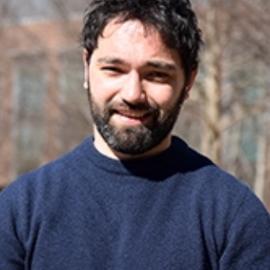
Fabrizio Falasca
Postdoctoral researcher [he/him]
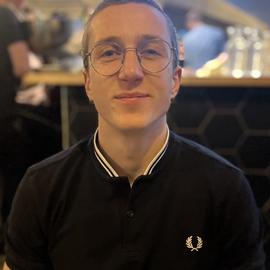
Renaud Falga
Postdoctoral researcher
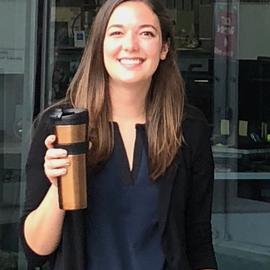
Julia Simpson
PhD Student [she/her]
Julia focuses on exchanges between the ocean and atmosphere, specifically examining ocean heat uptake. She uses machine learning to leverage in situ observations, remote sensing, and climate models to improve parameterizations of air-sea fluxes of heat and momentum. Her research is conducted through the National Science Foundation (NSF)-funded Science and Technology Center, Learning the Earth with Artificial Intelligence and Physics (LEAP). She is co-advised by Dr. Pierre Gentine (from Columbia University’s Department of Earth and Environmental Engineering) and Dr. Laure Zanna (a Professor of Mathematics and Atmosphere/Ocean Science at New York University), working in the Gentine Lab and Dr. Zanna’s Climate & Ocean Physics Group, respectively. Julia received a Bachelor of Science in Chemical Engineering from Washington University in St. Louis. She worked as an engineering consultant in process, energy, and environmental engineering for two years before starting a PhD at Columbia University in 2022.
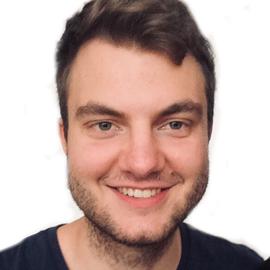
Linus Vogt
Postdoctoral researcher [he/him]